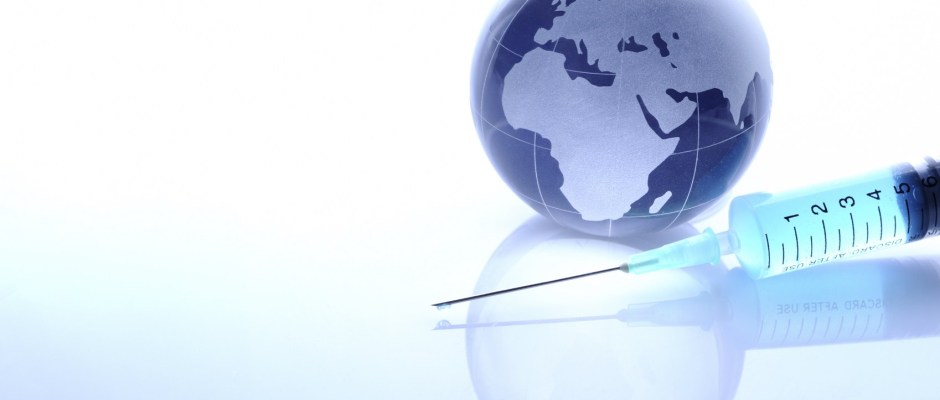
Vaccination has made an enormous contribution to global health. Two major infections, smallpox and rinderpest, have been eradicated. Despite these successes, approximately 6.6 million children still die each year and about a half of these deaths are caused by infections, including pneumonia and diarrhoea, which could be prevented by vaccination. Enhanced deployment of recently developed pneumococcal conjugate and rotavirus vaccines should, therefore, result in a further decline in childhood mortality. Development of vaccines against more complex infections, such as malaria, tuberculosis and HIV, has been challenging and achievements so far have been modest. Final success against these infections may require combination vaccinations, each component stimulating a different arm of the immune system. In the longer term, vaccines are likely to be used to prevent or modulate the course of some non-infectious diseases. Progress has already been made with therapeutic cancer vaccines and future potential targets include addiction, diabetes, hypertension and Alzheimer’s disease.
A vaccine is a biological preparation that provides active acquired immunity to a particular disease. A vaccine typically contains an agent that resembles a disease-causing microorganism and is often made from weakened or killed forms of the microbe, its toxins or one of its surface proteins. The agent stimulates the body’s immune system to recognize the agent as a threat, destroy it, and keep a record of it so that the immune system can more easily recognize and destroy any of these microorganisms that it later encounters.
Cholera vaccines can be oral or injectable. The oral vaccines are generally of two forms, inactivated and attenuated. Two variants of the inactivated oral vaccine currently are in use: WC-rBS and BivWC. WC-rBS is a monovalent inactivated vaccine containing killed whole cells of V. cholerae O1, plus additional recombinant cholera toxin B subunit. BivWC is a bivalent inactivated vaccine containing killed whole cells of V. cholerae O1 and V. The vaccine acts by inducing antibodies against both the bacterial components and the cholera toxin which is a protein complex secreted by the bacterium Vibrio cholera. The antibacterial intestinal antibodies prevent the bacteria from attaching to the intestinal wall, thereby impeding colonisation of V. cholerae O1. The anti-toxin intestinal antibodies prevent the cholera toxin from binding to the intestinal mucosal surface, thereby preventing the toxin-mediated diarrhoeal symptoms. he injected cholera vaccines are effective for people living where cholera is common. They offer some degree of protection for up to two years after a single shot, and for three to four years with annual booster. They reduce the risk of death from cholera by 50% in the first year after vaccination.
Anthrax disease can occur in people who are exposed to an infected animal or other source of anthrax bacteria. Anthrax disease can occur in people who are exposed to an infected animal or other source of anthrax bacteria. Anthrax is spread to a human through the skin, the stomach, or the lungs. The bacteria can enter the skin through a cut or wound that comes into contact with products from an infected animal such as meat. Anthrax Vaccine Adsorbed is a vaccine which treats anthrax. The vaccine works by inducing antibodies raised against PA that may contribute to protection by neutralizing the activities of the cytotoxic lethal toxin and edema toxin of anthrax. Anthrax vaccine does not contain live or killed forms of the bacteria that causes anthrax.
 Pharma and Biotech Advances