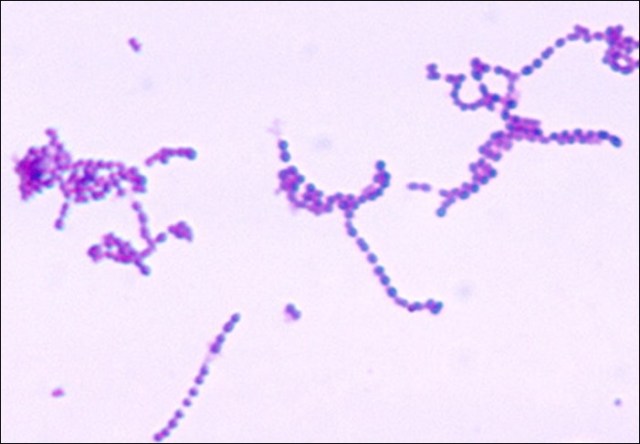
The different types of skin infections include bacterial, viral and fungal.
Symptoms within this can vary from mild to serious. Mild infections may be treatable with over-the-counter medications and home remedies, whereas other infections may require medical attention.
Impetigo is a skin infection caused by bacteria. It is usually caused by either group A β-hemolyticstreptococciorStaphylococcus aureus. 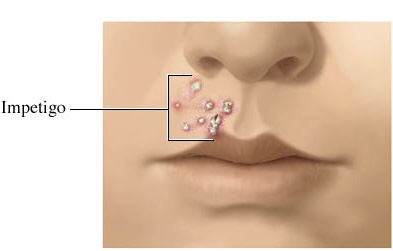
It is most common in children between the ages of two and six. It usually starts when bacteria get into a break in the skin, such as a cut, scratch, or insect bite. Impetigo is a skin infection caused by bacteria. It is most common in children between the ages of two and six.
It usually starts when bacteria get into a break in the skin, such as a cut, scratch, or insect bite. Other symptoms include fluid-filled blisters, itchy rash, skin lesions and swollen lymph nodes. Impetigo can spread by contact with sores or nasal discharge from an infected person, other causes include contact with sores or nasal discharge from an infected person. you can treat impetigo with antibiotics. toxins are the greatest virulence factor ofS. aureus, causing dissociation of epidermal cells with blister formation. Crucial factor to the infection virulence is the ability of these bacteria to produce circulating toxins that act as superantigens. Superantigens are able to skip certain steps of the immune response and promote massive activation of T lymphocytes and also the production of various lymphokines such as interleukin 1 and 6 and tumor necrosis factor alpha. This response may lead to the formation of exfoliative cutaneous eruption, vomiting, hypotension and shock.
Shingles is a disease caused by the varicella-zoster virus – the same virus that causes chickenpox.
After you have chickenpox, the virus stays in your body. It may not cause problems for many years. As you get older, the virus may reappear as shingles. Although it is most common in people over age 50, anyone who has had chickenpox is at risk.
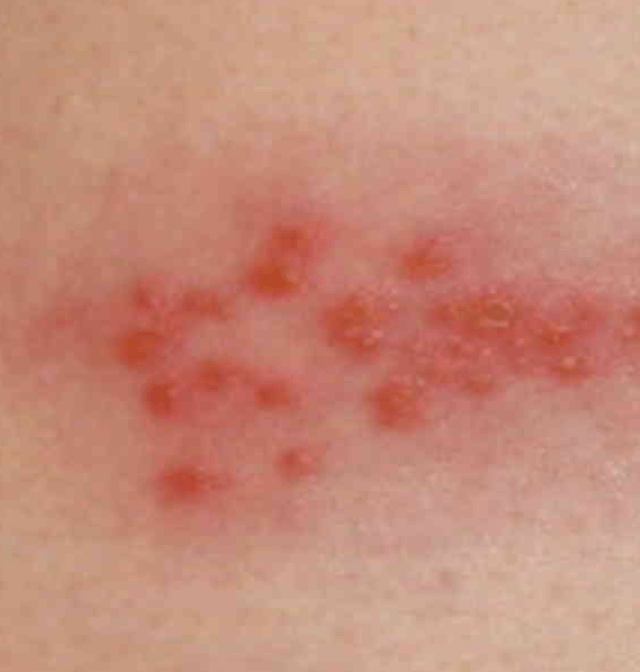
You can’t catch shingles from someone who has it. However, if you have a shingles rash, you can pass the virus to someone who has never had chickenpox. This would usually be a child, who could get chickenpox instead of shingles. The virus spreads through direct contact with the rash, and cannot spread through the air.Early signs of shingles include burning or shooting pain and tingling or itching, usually on one side of the body or face. The pain can be mild to severe. Rashes or blisters appear anywhere from one to 14 days later. If shingles appears on your face, it may affect your vision or hearing. There is no cure for shingles. Early treatment with medicines that fight the virus may help. These medicines may also help prevent lingering pain. A vaccine may prevent shingles or lessen its effects. One of the virualnce factors for this viral infection is adhesion of the virus to specific receptors on the surface of cells. This process is mediated by adhesins that are part of the viral capsid or membrane envelope. The interaction of viral adhesinswith specific cell receptors defines the tropism(preferential targeting) of viruses for specific cells, tissues, and organs in the body. The spike protein hemagglutinin found onInfluenzavirusis an example of a viral adhesin; it allows the virus to bind to thesialic acid on the membrane of host respiratory and intestinal cells.
Athlete’s foot — also called tinea pedis — is a contagious fungal infection that affects the skin on the feet and can spread to the toenails and sometimes the hands. Athlete’s foot occurs when the tinea fungus grows on the feet. You can catch the fungus through direct contact with an infected person or by touching surfaces contaminated with the fungus. The fungus thrives in warm, moist environments and is commonly found in showers, on locker room floors, and around swimming pools. Symptoms include, itching, stinging, and burning between the toes, itching, stinging, and burning on the soles of the feet and blisters on the feet that itch. Athlete’s foot can often be treated with over-the-counter (OTC) topical antifungal medications. Virulence factors include the active abstraction of some nutrients from host molecules, for example, nitrogen from host proteins by secreted protease activities. Fungal infection also led to the acquisition of micronutrients such as metals, since the host has evolved mechanisms to deny access to metals like zinc or iron (known as ‘nutritional immunity’). In turn, fungal pathogens have developed sophisticated strategies to gain iron, zinc and other metals from the host. Similarly, to survive in the host fungal pathogens must exhibit physical robustness (e.g. conferred by a protective cell wall) and stress resistance (e.g. against reactive oxygen species (ROS) or must be able to manipulate environmental conditions like the ambient pH.
 Pharma and Biotech Advances